Step by step, we have slowly reached the last grammar lesson... Can you imagine what is it about? "Adverbs"!!
As you know, the first thing that is important to do is... Reviewing! For this lesson we are going to need a revision of the verbs. To do it, we can show the children a picture with some people doing different actions and elicit from them some verbs.
With these verbs, we make a couple of sentences or three and we write them on the board. Now, is the time to explain that, as adjectives describe nouns, there are also words that describe verbs. This words are "adverbs".
With the children, we think of some adverbs that can describe the verbs we wrote in the sentences.
HANDS ON!! Now the children have to practice in order to reinforce the adverbs. We are going to give them a worksheet where they have adverbs and sentences. They will have to put each adverb in the sentence where it belongs to.
Hope you liked it! 馃槈
If YOU ARE A WONDERFUL ENGLISH TEACHER THAT NEED SOME IDEAS... THIS IS YOUR PLACE!
Mostrando entradas con la etiqueta grammar. Mostrar todas las entradas
viernes, 4 de enero de 2019
10. ADJECTIVES
What a sunny, cold, beautiful morning, isn't it? Perfect for a lesson about... of course... "Adjectives"!!
What about starting with a brainstorm? We can ask the children for some examples of common nouns. With this exercise we make a revision and we algo introduce something we are going to use later.
As an idea to get into the main point, we can find a picture with some snakes. We ask the children what the picture shows and which part of the speech the word "snake" is.
After that, we write on the board a simple sentence with the word "snake" and we underline the word. Now, we tell them that this sentence doesn't tell us very much about the snake, so they will have to think of words that describe it.
Choose one of the adjectives and write it. We can tell the students that a word that describes a noun is an "adjective".
To practice, we can choose another snake and, with the children, think of many adjectives as possible and write them.
HANDS ON!! To make the children practice with the adjectives we can use a worksheet with different snakes. The students will have to read the speech bubbles of each snake and colour or draw what it says to make the snake fit its adjective.
Just to finish, they will have to think about three more adjectives to describe a snake and colour it according to what they have written.
Hope you liked it! 馃槈
9. CONJUGATING VERBS
Hey! This time I bring you a bigger challenge... "Conjugating verbs"... Are you ready?
As in the lesson of "Verbs" it is important to make a revision first. We can show the children some words in the board including proper and common nouns and verbs and tell them to say which type of word is each one.
After that, we write a couple of sentences in the board. All together we underline the words we now with a different colour for each type of word.
When we have finished this revision, we get into the main point. First thing we can do is revise the pronouns with their actions, as we are going to use them in order to conjugate the verb.
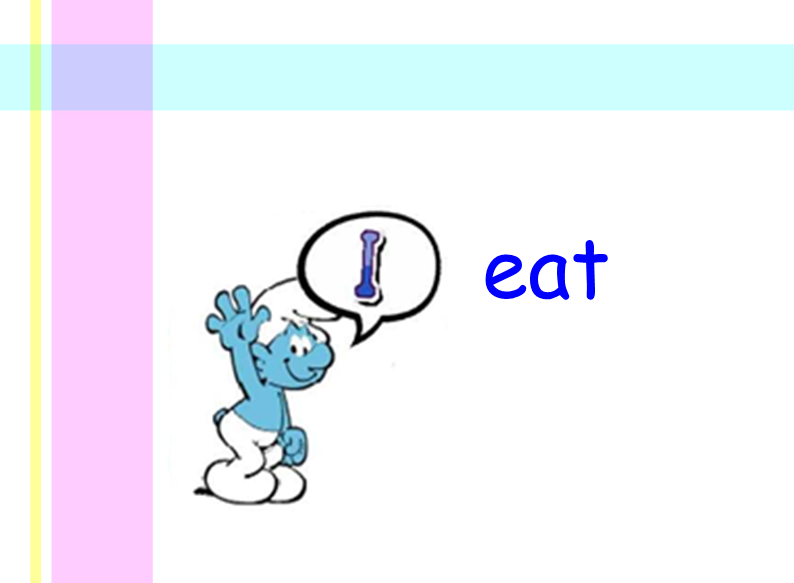
Now we chose a verb and we tell the children that what we are going to do is join the verb with the pronouns. With the children we say:
This is called "conjugating" a verb. We have to make sure that the children understand that in the third person singular: he, she, it, the verb needs an "s" at the end of the root.
To practice we can tell the students to think of more verbs and conjugate them doing also the actions for each pronoun.
HANDS ON!! This activity will be about conjugating (of course) and also drawing.
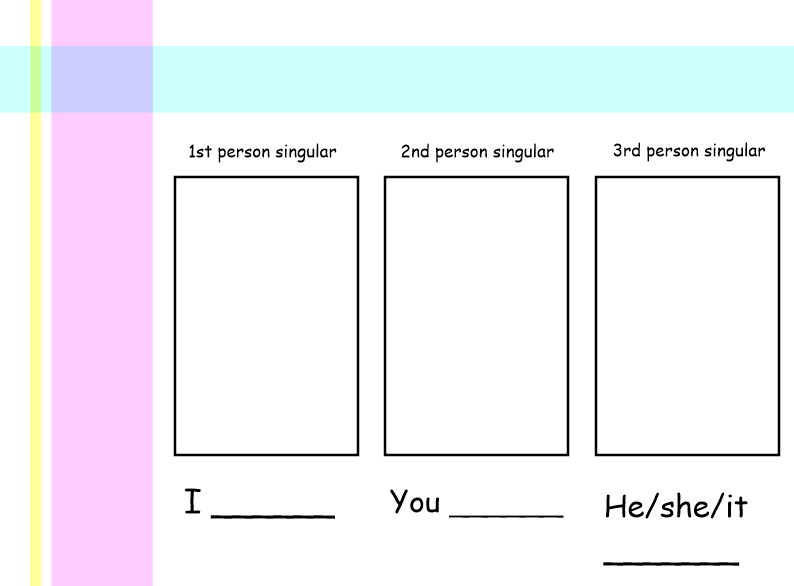
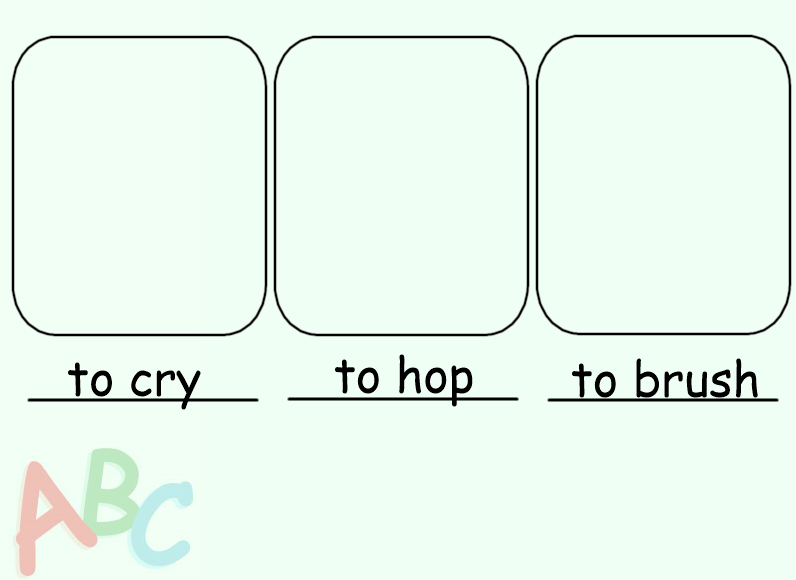
We give the children a worksheet where there are boxes and under each box there is a pronoun and a space to write a verb. We are going to give them a verb. They will have to conjugate it and in the boxes draw an appropriate picture of each combination pronoun-verb.
Hope you liked it! 馃槈
As in the lesson of "Verbs" it is important to make a revision first. We can show the children some words in the board including proper and common nouns and verbs and tell them to say which type of word is each one.
After that, we write a couple of sentences in the board. All together we underline the words we now with a different colour for each type of word.
When we have finished this revision, we get into the main point. First thing we can do is revise the pronouns with their actions, as we are going to use them in order to conjugate the verb.
Now we chose a verb and we tell the children that what we are going to do is join the verb with the pronouns. With the children we say:
This is called "conjugating" a verb. We have to make sure that the children understand that in the third person singular: he, she, it, the verb needs an "s" at the end of the root.
To practice we can tell the students to think of more verbs and conjugate them doing also the actions for each pronoun.
HANDS ON!! This activity will be about conjugating (of course) and also drawing.
We give the children a worksheet where there are boxes and under each box there is a pronoun and a space to write a verb. We are going to give them a verb. They will have to conjugate it and in the boxes draw an appropriate picture of each combination pronoun-verb.
Hope you liked it! 馃槈
8. VERBS
Wow, this is getting difficult... We will see "Verbs" this time!!
As we have seen many things till now, it is a good idea to revise the proper and common nouns and the pronouns. We can show the children some nouns so they can say if they are proper or common. Then, as a whole class, we can say the pronouns with their actions.
After this introductory activities, we write some sentences on the board. With the children, we underline the words they already know, nouns and pronouns.
Now, we can tell the students that there is another type of word that is called verb. We can define a verb as a "doing" word.
To teach the children some verbs we can use a worksheet where different characters do different things. I've choosen a worksheet where some bees are doing different actions. With the students, we can make a list with the verbs that appear in the picture.
Generally children will say the verbs in gerund form, e.g. "jumping". We have to teach them that this is part of the verb. The infinitive would be "to jump". The root word is "jump". We have to tell them that this root changes according to the tense.
HANDS ON!! After this theory, we have to keep the children active, so now they are going to practice.
First, we give them three pictures of bees doing different things. They will have to write the verb root.
Then, we give them three verbs writen and they will have to make a drawing that represents those verbs.
Finally, we don't give them anything. They will have to think of three verbs, write them and make a drawing of each of them.
Hope you liked it! 馃槈
7. PRONOUNS
I, you, he, she... YES!! Today's grammar lesson is about "Pronouns".
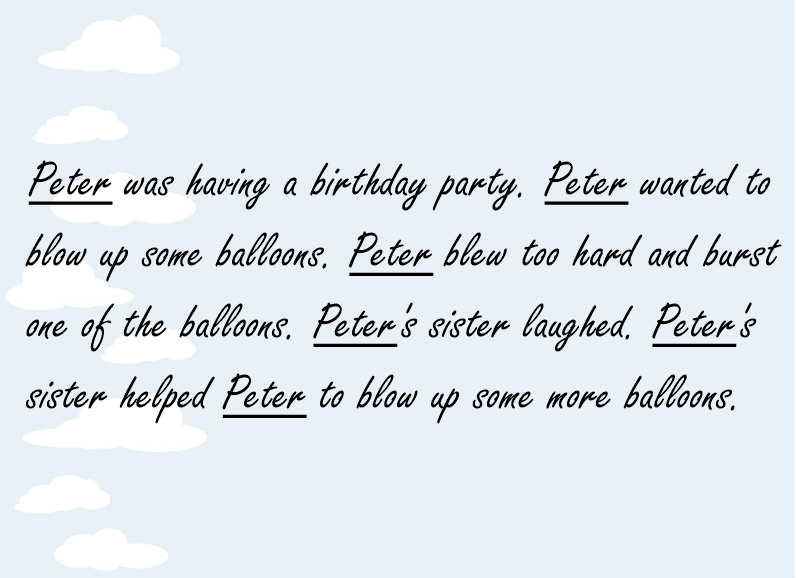
This time we are going to start telling the children a story without pronouns. Something like this:
After that, we will ask the students what sounds wrong.
Now we can tell the children that to avoid repeating nouns, we can use other short words that are called pronouns. These pronouns thake the place of the nouns.
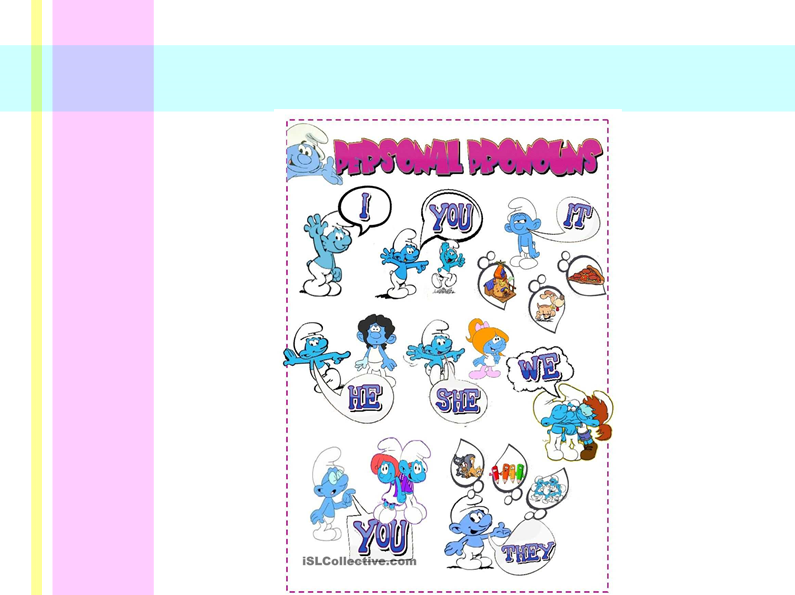
After checking if the students remember what a noun is, we can tell them the main pronouns. To make it easier for them, we can add an action to each pronoun, for example: I - point to self.
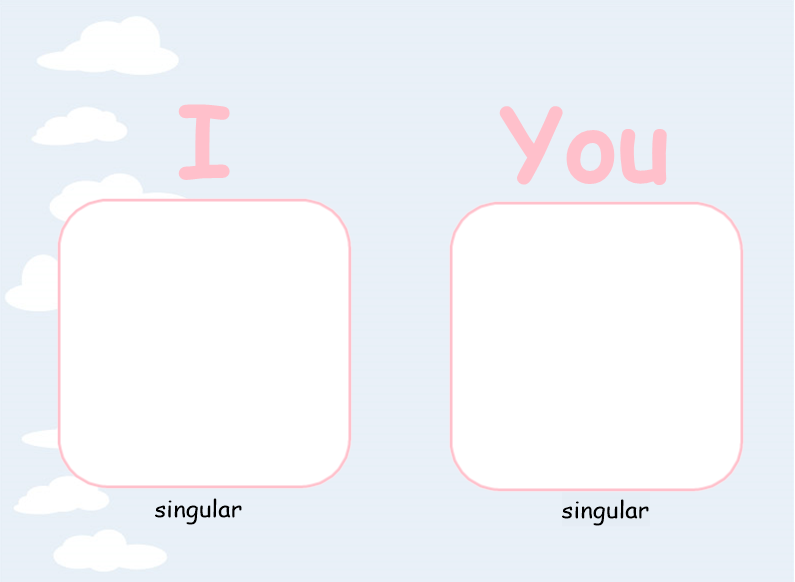
We have to be careful and tell the children that "we" and "they" are plural. The word "you" appears twice and we have to make sure that the children undestand that the first time is singular and the second is plural.
HANDS ON!! To reinforce the contents we can provide the children with an activity where they have to make a drawing that represent each pronoun for them.
Hope you liked it! 馃槈
This time we are going to start telling the children a story without pronouns. Something like this:
After that, we will ask the students what sounds wrong.
Now we can tell the children that to avoid repeating nouns, we can use other short words that are called pronouns. These pronouns thake the place of the nouns.
After checking if the students remember what a noun is, we can tell them the main pronouns. To make it easier for them, we can add an action to each pronoun, for example: I - point to self.
We have to be careful and tell the children that "we" and "they" are plural. The word "you" appears twice and we have to make sure that the children undestand that the first time is singular and the second is plural.
HANDS ON!! To reinforce the contents we can provide the children with an activity where they have to make a drawing that represent each pronoun for them.
Hope you liked it! 馃槈
jueves, 3 de enero de 2019
6. PLURALS
Hey, if you are very hungry and I offer you some cookies, would you eat one or more than one? Probably more than one!!
That's what we are working on today, "Plurals"!!
To start the lesson, as an introduction, we can put all the students in a circle and revise the alphabet by asking one child to start and then doing the round following the alphabetical order. We can do this more than one time, starting with a different student.
To get into the main point, what we are going to do is show the students a picture of a dog and ask them what it is. Then, we do the same with a picture of several dogs. After that, we ask them how the two pictures differ.
Now is the perfect time to explain that nouns usually change when they describe more than one. The name for the nouns that describe only one of something is singular, and the name for the nouns that describe more than one is plural. The simplest way of making a plural is adding an "s" at the end of the singular form.
To practice, we can call out some nouns and make the students say their plurals.
Finally, as an activity where the children could practice and be more active, we can give them pictures of different nouns. In one picture there will be only one of that noun and in the other more than one. They will have to say the singular and the plural form of each noun.
This activity has a wide range of possibilities. We can do it orally or writen (if our children are old enough); we can also do it whole group all together, in small groups, in pairs, individually...
Hope you liked it! 馃槈
That's what we are working on today, "Plurals"!!
To start the lesson, as an introduction, we can put all the students in a circle and revise the alphabet by asking one child to start and then doing the round following the alphabetical order. We can do this more than one time, starting with a different student.
To get into the main point, what we are going to do is show the students a picture of a dog and ask them what it is. Then, we do the same with a picture of several dogs. After that, we ask them how the two pictures differ.
Now is the perfect time to explain that nouns usually change when they describe more than one. The name for the nouns that describe only one of something is singular, and the name for the nouns that describe more than one is plural. The simplest way of making a plural is adding an "s" at the end of the singular form.
To practice, we can call out some nouns and make the students say their plurals.
Finally, as an activity where the children could practice and be more active, we can give them pictures of different nouns. In one picture there will be only one of that noun and in the other more than one. They will have to say the singular and the plural form of each noun.
This activity has a wide range of possibilities. We can do it orally or writen (if our children are old enough); we can also do it whole group all together, in small groups, in pairs, individually...
Hope you liked it! 馃槈
Suscribirse a:
Comentarios (Atom)